Ka Papa Lo'i
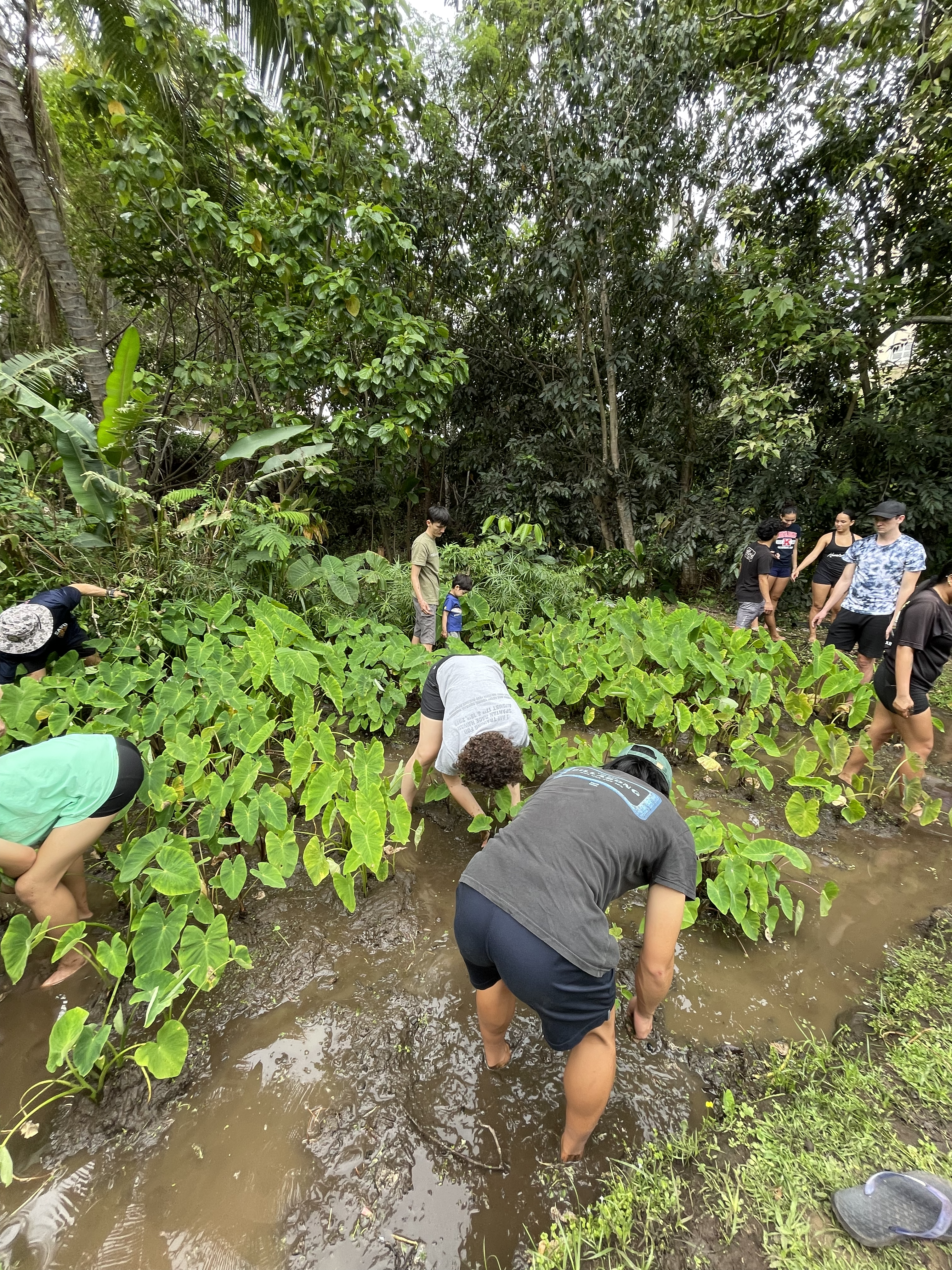
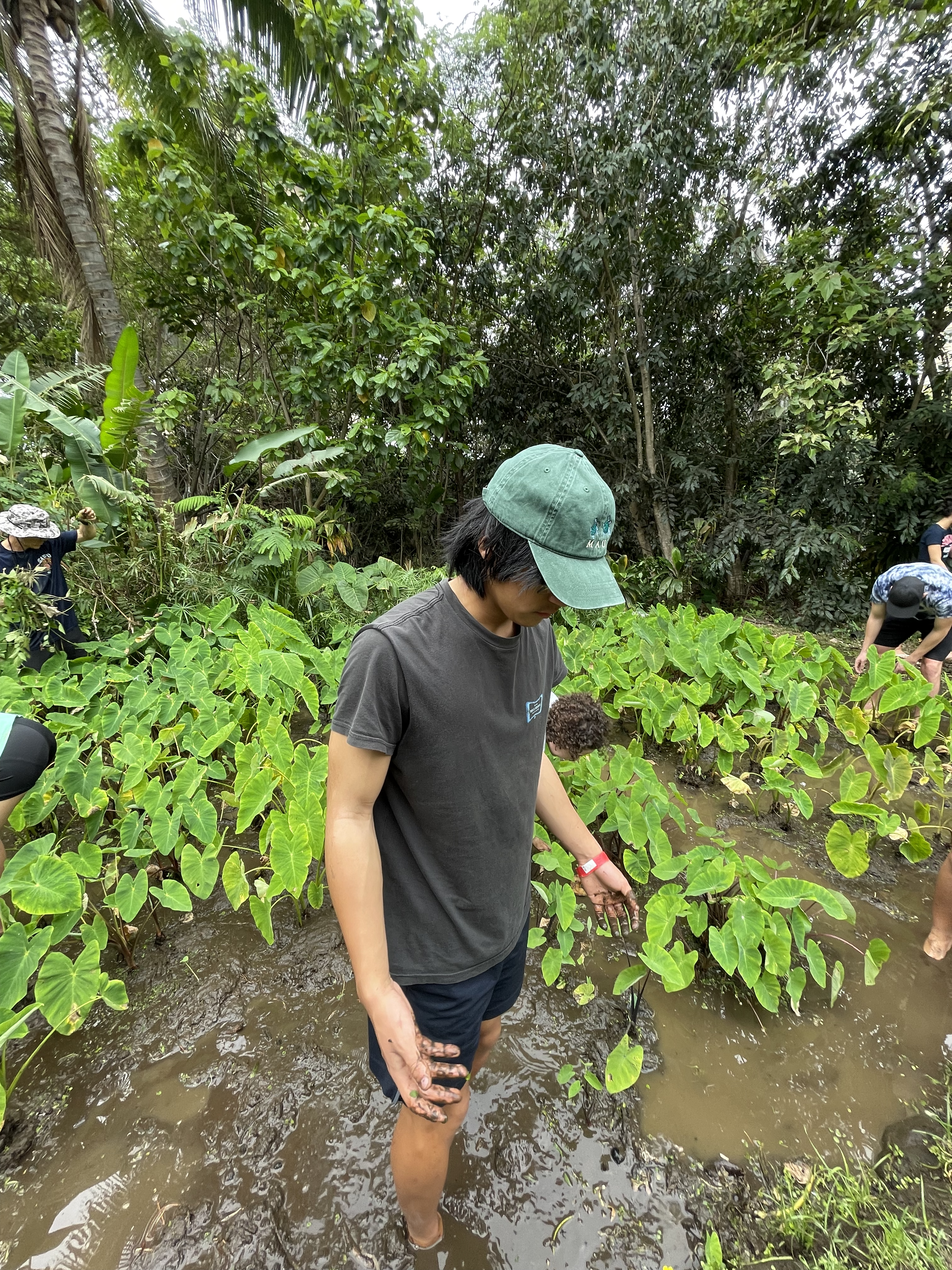
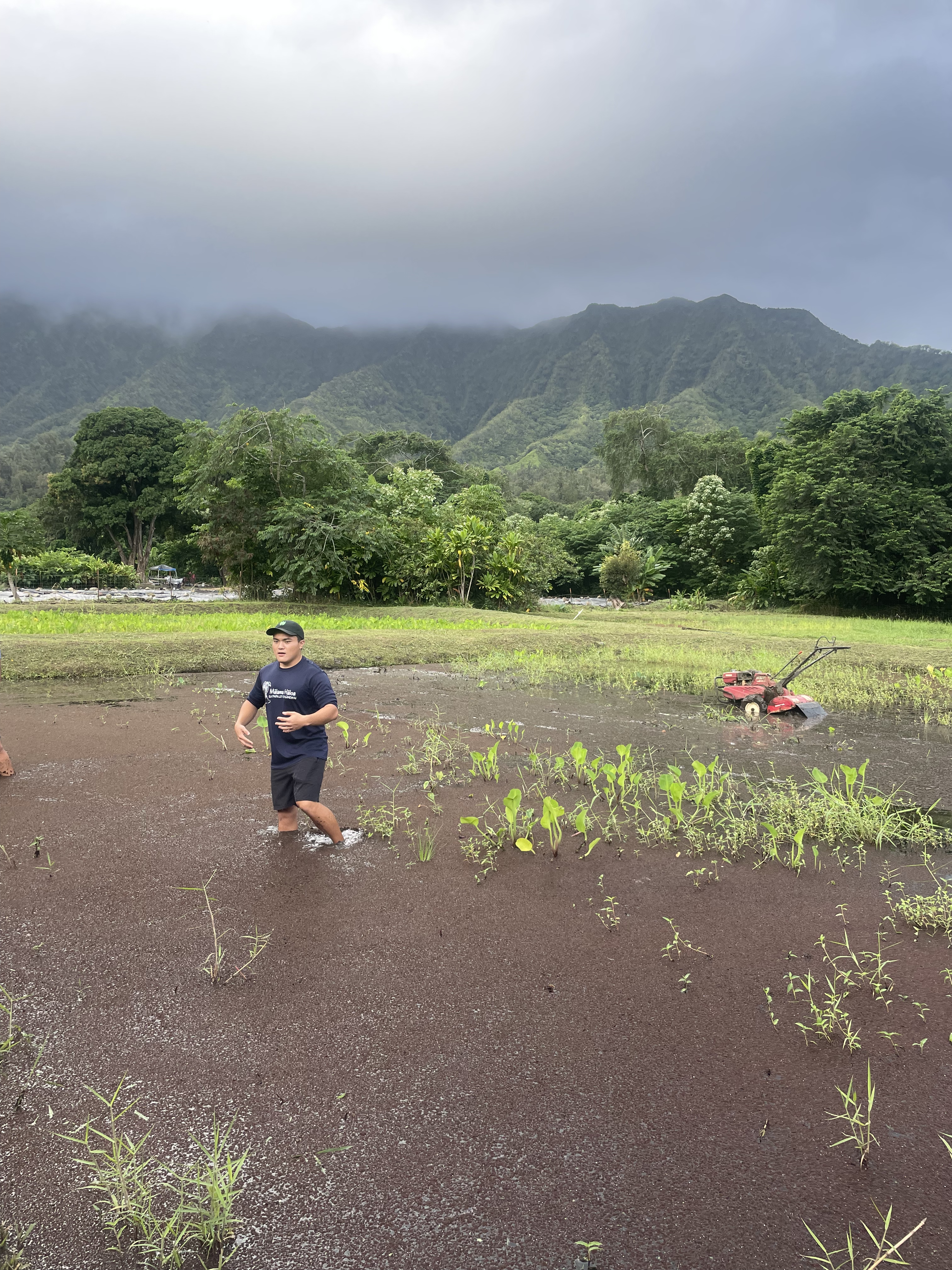
Ka Papa Lo’i is a service-learning experience centered around traditional Hawaiian agriculture, particularly the cultivation of taro (kalo). This event allows volunteers to connect with the land (ʻāina), learn its history, and contribute to its maintenance. I participated in this activity at two significant locations: Ka Papa Lo’i Kanewai on the University of Hawaiʻi at Mānoa campus and Ka Papa Lo’i Punalu’u on the northeastern side of Oʻahu.
My Role and Contributions
This was a collaborative effort involving many volunteers. My primary responsibilities included:
-
Taro Plant Maintenance: I carefully removed dead stems and leaves from each taro plant, as these could become invasive or hinder growth. I also reshaped and reinforced the mud around the base of the plants to support healthy growth.
-
Soil Preparation: I participated in compacting and reinforcing the soil by trampling specific areas, which helps prepare the land for new and existing taro plants.
-
Boulder Collection: At Ka Papa Lo’i Punalu’u, I helped collect large river stones and load them into trucks for transport to Ka Papa Lo’i Kanewai. These boulders play an essential role in maintaining the taro patches at Kanewai, which lacks access to river stones.
Lessons Learned
Through this experience, I gained a deeper appreciation for the Hawaiian value of Mālama ʻĀina—to take care of the land. I learned that caring for the land not only sustains its resources but also nurtures a symbiotic relationship where the land gives back in abundance. On a personal level, this lesson resonated beyond agriculture. I realized that when we care for what surrounds us—whether it’s the environment, our relationships, or our work—we create a cycle of mutual benefit and fulfillment